Tuesday, January 23, 2024

What’s Indoor Air Quality Like in Long-Term Care Facilities During Wildfires? Worse Than You’d Think.

Every year, wildfires across the western U.S. and Canada send plumes of smoke into the sky. When that smoke blows into southwestern Idaho’s Treasure Valley, it blankets Boise-area residents in dirty air.

They include seniors living in long-term care facilities, many of whom are considered an at-risk population for smoke exposure because of respiratory or cardiac diseases.

“An astonishing amount of smoke gets inside these facilities,” said Luke Montrose, an environmental toxicologist and researcher at Colorado State University. Data from monitors Montrose installed in four Idaho long-term care facilities in 2020 showed that large amounts of smoke pollution recorded outside during wildfire season seeped into the facilities. One building let in 50% of the particulate matter outside; another, 100%. In some cases, Montrose said, “it was no better to be inside than to be outside during those smoke events.”
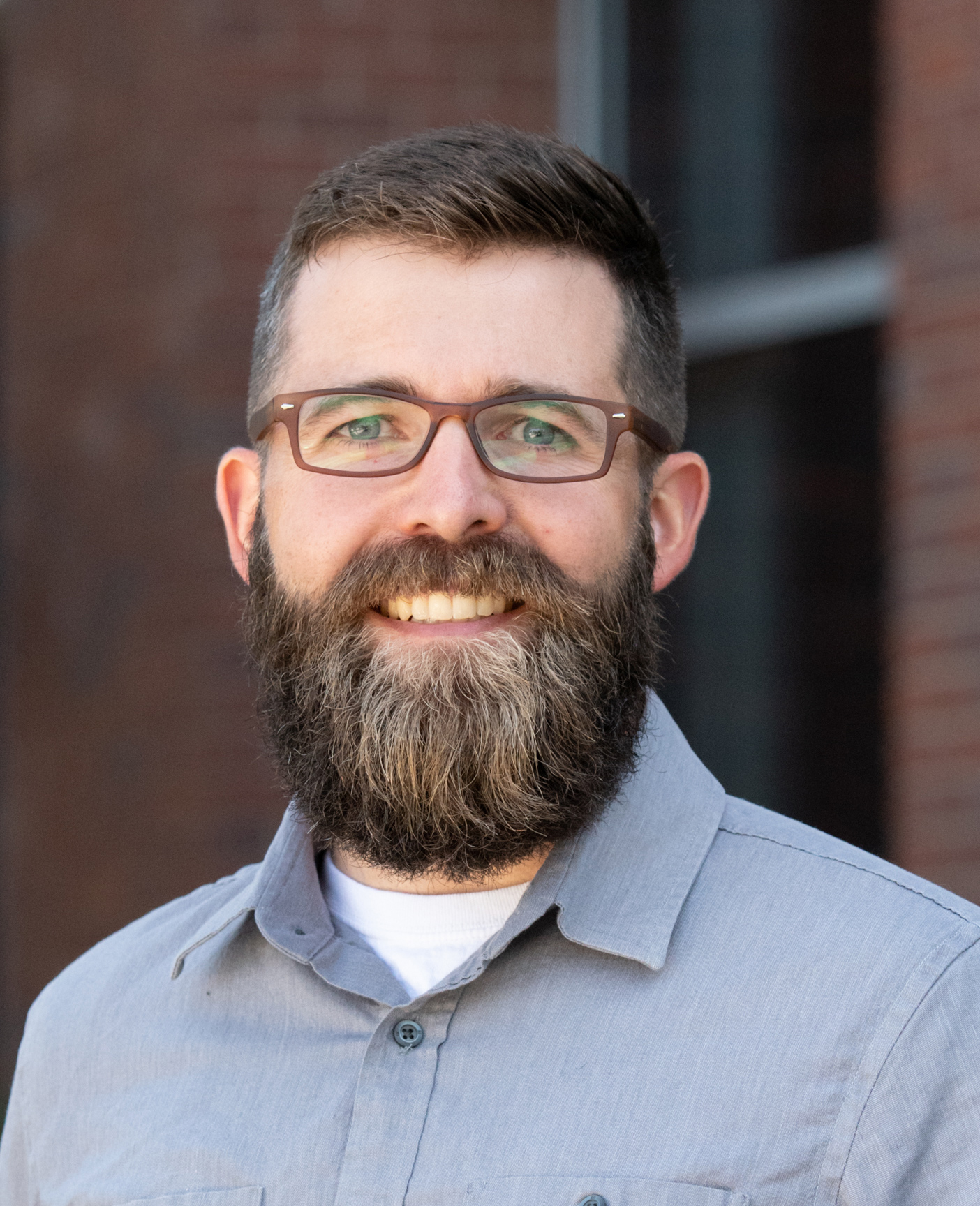
That’s why Montrose has spent the past few years installing more monitors in care facilities across Idaho and Montana. The study is expanding into Colorado this summer.

Understanding and addressing how wildfire smoke affects indoor air quality could help better treat the roughly 1.4 million seniors who live in more than 15,500 Medicare- and Medicaid-certified nursing homes nationwide and nearly a million more who live in assisted living facilities.

“It may be a game-changer for quality of care,” said Robert Vande Merwe, executive director of the Idaho Health Care Association. Vande Merwe helped persuade facilities to join Montrose’s study.

Although residents of the western U.S. have lived with smoky summers for decades, the fallout from wildfires is becoming a nationwide issue. Smoke from blazes in eastern Canada barreled into the densely populated Northeast and Midwest last June, making the skies above Toronto, New York, Chicago, and much of the Atlantic Coast glow an eerie orange. More than 120 million people were under air quality alerts. As wildfires increase in size, intensity, and duration, fueled by a combination of climate change and forest mismanagement, the smoke they generate will likely affect more people.

“We’re going to see more and more smoke events that reach further across the U.S. and across the world,” said Savannah D’Evelyn, a postdoctoral scholar at the University of Washington who studies wildfire smoke and its effects on health. She was not involved in Montrose’s study.

Air pollution from wildfire smoke — a brew of pollutants, water vapor, and fine debris — is a growing public health problem. Tiny particles known as PM 2.5 are small enough to embed deep into people’s lungs and, sometimes, infiltrate their bloodstream. Research has shown PM 2.5 can cause asthma and respiratory inflammation or jeopardize lung function, and the particles have been tied to some cancers. They are especially dangerous for children and people with preexisting heart or lung conditions — including seniors, the focus of Montrose’s work.

“I think honing in on this particular community that is really quite impacted by smoke exposure on the health side of things is really great,” D’Evelyn said. “It’s a gap that needs to be addressed.”

For years, public health officials have told people to go inside on bad air quality days, even though, without testing and filtration, indoor air quality often isn’t much better than what’s outside. Although skilled nursing facilities follow numerous federal regulations to participate in the Medicaid and Medicare programs — covering anything from building safety features, like fire sprinklers, to residents’ rights — indoor air quality isn’t addressed.

“There really aren’t any regulatory standards for indoor air quality, broadly, in any country that I’m aware of,” said Katherine Pruitt, national senior director for policy at the American Lung Association.

Without the few indoor air quality monitors in the study, long-term care facility managers or operators might check their local air quality index, or AQI, on their smartphone’s weather app or by watching the news. But air quality monitors don’t always provide accurate information about the air outside, let alone inside a building. Rural areas are particularly underserved by air quality monitors. According to Montrose, 25% to 30% of skilled nursing facilities in the Mountain West are more than 30 miles from a regulatory-grade monitor. Indoor air quality monitoring is rare outside of studies like Montrose’s.

That’s why Montrose is on a quest to get more air quality monitors placed inside facilities. In 2019, he contacted more than 80 Boise-area nursing and assisted living facilities to gauge interest and concern about wildfire smoke. In 2020, he collected data from indoor and outdoor air quality monitors at four nursing homes — two in the Boise area, others in northern and eastern Idaho. The monitors recorded particulate air pollution inside one facility nearly 17 times what’s considered healthy.

In 2021, data collected from six facilities from July to October — four in Idaho and two in the Missoula, Montana, area — also showed that in some buildings indoor and outdoor air quality were almost identical on smoky days. Montrose repeated the monitoring at four other southern Idaho facilities last summer. The monitors fed real-time data to a dashboard that people running the nursing homes could see and respond to.

Protecting seniors from wildfire smoke is an important piece of wildfire preparedness, yet Montrose acknowledged that conducting research in nursing homes and care facilities has challenges. Unique ethical considerations arise with dementia or Alzheimer’s patients, who can’t give informed consent. Staff turnover makes it hard for researchers like Montrose to establish relationships with facility operators, and asking overburdened nurses or employees to do extra work, like understand and check air quality monitors, can be a nonstarter. Still, Montrose said, people living in long-term care facilities are particularly vulnerable. “If we can protect them, there’s great benefit to our communities,” he said.

Some facilities in Idaho have made changes because of the research. Those include a pre-fire season facility checklist to make sure filtering systems are in good shape and that doors and windows are properly sealed. They also share the area’s AQI as part of their daily morning safety meetings.

Mark Troen, regional maintenance director for 10 Edgewood Healthcare facilities in the Boise area, four of which had monitors last summer, laid out a litany of things he does when the indoor air quality rises past healthy levels: changing air filters to a higher level that traps more particulates, turning off outdoor air intake, and alerting staff to keep doors and windows closed. “Anything I can do to keep the residents safe, I’m all for,” Troen said.

Clinical staff members also have identified which residents have respiratory problems or are immunocompromised. In an intense smoke event, those people may get portable air filtration in their rooms for extra protection.

Troen plans to install air quality monitors from his own budget once the study’s monitors need to be replaced due to age. “To actually see in real time what your indoor air quality is is huge,” he said. “It helps us mitigate some of those problems, rather than waiting until it’s bad.”

Anyone can take steps to improve the air they’re breathing during wildfire season. “It’s pretty easy to clean indoor air,” D’Evelyn said. HEPA air filters are the gold standard but can cost upward of $100; creating a box fan filter is a cheaper alternative. According to D’Evelyn, making even one room in a building a “clean air space” can make a difference during a wildfire.

The American Lung Association’s Pruitt said starting policy conversations about regulating indoor air quality faces many barriers, including perceptions of federal overreach. In the absence of federal regulations, Pruitt believes, the most effective actions would likely come from state or local building codes and ventilation standards. “Policymakers should be looking at the steps that need to be taken to protect people from exposure to hazardous levels of smoke or other outdoor pollutants,” she said.

Montrose is recruiting more nursing homes to install air quality monitors this summer, including additional facilities in Idaho, Colorado, and Montana. Vande Merwe, of the Idaho Health Care Association, said other places in the region — like his hometown, Salt Lake City, which is situated where smoke and other pollutants accumulate — should take note. Breathing in the best possible air could make a big difference for residents’ health and quality of life as they age, he said.

KFF Health News is a national newsroom that produces in-depth journalism about health issues and is one of the core operating programs at KFF—an independent source of health policy research, polling, and journalism. Learn more about KFF.

USE OUR CONTENT

This story can be republished for free (details).


from https://ift.tt/oBQbpiv
Check out https://un-you-sual.tumblr.com

Monday, January 22, 2024

What the Health Care Sector Was Selling at the J.P. Morgan Confab

SAN FRANCISCO — Every year, thousands of bankers, venture capitalists, private equity investors, and other moneybags flock to San Francisco’s Union Square to pursue deals. Scores of security guards keep the homeless, the snoops, and the patent-stealers at bay, while the dealmakers pack into the cramped Westin St. Francis hotel and its surrounds to meet with cash-hungry executives from biotech and other health care companies. After a few years of pandemic slack, the 2024 J.P. Morgan Healthcare Conference regained its full vigor, drawing 8,304 attendees in early January to talk science, medicine, and, especially, money.

1. Artificial Intelligence: Revolutionary or Not?

Of the 624 companies that pitched at the four-day conference, the biggest overflow crowd may have belonged to Nvidia, which unlike the others isn’t a health care company. Nvidia makes the silicon chips whose computing power, when paired with ginormous catalogs of genes, proteins, chemical sequences, and other data, will “revolutionize” drug-making, according to Kimberly Powell, the company’s vice president of health care. Soon, she said, computers will customize drugs as “health care becomes a technology industry.” One might think that such advances could save money, but Powell’s emphasis was on their potential for wealth creation. “The world’s first trillion-dollar drug company is out there somewhere,” she dreamily opined.

Some health care systems are also hyping AI. The Mayo Clinic, for example, highlighted AI’s capacity to improve the accuracy of patient diagnoses. The nonprofit hospital system presented an electrocardiogram algorithm that can predict atrial fibrillation three months before an official diagnosis; another Mayo AI model can detect pancreatic cancer on scans earlier than a provider could, said Matthew Callstrom, chair of radiology at the Mayo Clinic in Rochester, Minnesota.

No one really knows how far — or where — AI will take health care, but Nvidia’s recently announced $100 million deal with Amgen, which has access to 500 million human genomes, made some conference attendees uneasy. If Big Pharma can discover its own drugs, “biotech will disappear,” said Sherif Hanala of Seqens, a contract drug manufacturing company, during a lunch-table chat with KFF Health News and others. Others shrugged off that notion. The first AI algorithms beat clinicians at analyzing radiological scans in 2014. But since that year, “I haven’t seen a single AI company partner with pharma and complete a phase I human clinical trial,” said Alex Zhavoronkov, founder and CEO of Insilico Medicine — one of the companies using AI to do drug development. “Biology is hard.”

2. Weight Loss Pill Profits and Doubts

With predictions of a $100 billion annual market for GLP-1 agonists, the new class of weight loss drugs, many investors were asking their favorite biotech entrepreneurs whether they had a new Ozempic or Mounjaro in the wings this year, Zhavoronkov noted. In response, he opened his parlays with investors by saying, “I have a very cool product that helps you lose weight and gain muscle.” Then he would hand the person a pair of Insilico Medicine-embossed bicycle racing gloves.

More conventional discussions about the GLP-1s focused on how insurance will cover the current $13,000 annual cost for the estimated 40% of Americans who are obese and might want to go on the drugs. Sarah Emond, president of the Institute for Clinical and Economic Review, which calculates the cost and effectiveness of medical treatments, said that in the United Kingdom the National Health Service began paying in 2022 for obese patients to receive two years of semaglutide — something neither Medicare nor many insurers are covering in the U.S. even now.

But studies show people who go off the drugs typically regain two-thirds of what they lose, said Diana Thiara, medical director for the University of California-San Francisco weight management program. Recent research shows that the use of these drugs for three years reduces the risk of death, heart attack, and stroke in non-diabetic overweight patients. To do right by them, the U.S. health care system will have to reckon with the need for long-term use, she said. “I’ve never heard an insurer say, ‘After two years of treating this diabetes, I hope you’re finished,’” she said. “Is there a bias against those with obesity?”

3. Spotlight on Tax-Exempt Hospitals

Nonprofit hospitals showed off their investment appeal at the conference. Fifteen health systems representing major players across the country touted their value and the audience was intrigued: When headliners like the Mayo Clinic and the Cleveland Clinic took the stage, chairs were filled, and late arrivals crowded in the back of the room.

These hospitals, which are supposed to provide community benefits in exchange for not paying taxes, were eager to demonstrate financial stability and showcase money-making mechanisms besides patient care — they call it “revenue diversification.” PowerPoints skimmed through recent operating losses and lingered on the hospital systems’ vast cash reserves, expansion plans, and for-profit partnerships to commercialize research discoveries.

At Mass General Brigham, such research has led to the development of 36 drugs currently in clinical trials, according to the hospital’s presentation. The Boston-based health system, which has $4 billion in committed research funding, said its findings have led to the formation of more than 300 companies in the past decade.

Hospital executives thanked existing bondholders and welcomed new investors.

“For those of you who hold our debt, taxable and tax-exempt, thank you,” John Mordach, chief financial officer of Jefferson Health, a health system in Pennsylvania and New Jersey. “For those who don’t, I think we’re a great, undervalued investment, and we get a great return.”

Other nonprofit hospitals talked up institutes to draw new patients and expand into lucrative territories. Sutter Health, based in California, said it plans to add 30 facilities in attractive markets across Northern California in the next three years. It expanded to the Central Coast in October after acquiring the Sansum Clinic. 

4. Money From New — And Old — Treatments for Autoimmune Disease

Autoimmunity drugs, which earn the industry $200 billion globally each year, were another hot theme, with various companies talking up development programs aimed at using current cancer drug platforms to create remedies for conditions like lupus and rheumatoid arthritis. AbbVie, which has led the sector with its $200 billion Humira, the world’s best-selling drug, had pride of place at the conference with a presentation in the hotel’s 10,000-square-foot Grand Ballroom.

CEO Robert Michael crowed about the company’s newer autoimmune drugs, Skyrizi and Rinvoq, and bragged that sales of two-decades-old Humira were going “better than anticipated.” Although nine biosimilar — essentially, generic — versions of the drug, adalimumab, entered the market last year, AbbVie expects to earn more than $7 billion on Humira this year since the “vast majority” of patients will remain on the market leader.

In its own presentation, biosimilar-maker Coherus BioSciences conceded that sales of Yusimry, its Humira knockoff listed at one-seventh the price of the original, would be flat until 2025, when Medicare changes take effect that could push health plans toward using cheaper drugs.

Biosimilars could save the U.S. health care system $100 billion a year, said Stefan Glombitza, CEO of Munich-based Formycon, another biosimilar-maker, but there are challenges since each biosimilar costs $150 million to $250 million to develop. Seeing nine companies enter the market to challenge Humira “was shocking,” he said. “I don’t think this will happen again.”

KFF Health News is a national newsroom that produces in-depth journalism about health issues and is one of the core operating programs at KFF—an independent source of health policy research, polling, and journalism. Learn more about KFF.

USE OUR CONTENT

This story can be republished for free (details).


from https://ift.tt/qUnPkxT
Check out https://un-you-sual.tumblr.com

Saturday, January 20, 2024

Journalist Talks Distribution of Opioid Funds — And the Companies Angling for a Piece

KFF Health News senior correspondent Aneri Pattani discussed how business interests are positioning themselves and their wares to get a piece of the opioid settlement funds on “Marketplace” on Jan. 15. Pattani also discussed how state and local governments across the country are using settlement money on Illinois Public Media’s “The 21st Show” on Jan. 11.

KFF Health News is a national newsroom that produces in-depth journalism about health issues and is one of the core operating programs at KFF—an independent source of health policy research, polling, and journalism. Learn more about KFF.

USE OUR CONTENT

This story can be republished for free (details).


from https://ift.tt/YUrOuxf
Check out https://un-you-sual.tumblr.com

Friday, January 19, 2024

Montana’s Effort to Expand Religious Exemptions to Vaccines Prompts Political Standoff

Montana lawmakers are in a standoff with the state’s health department over a package of sweeping changes to child care licensing rules that includes a disputed provision to allow religious exemptions to routine vaccinations for children and workers.

Both Republican and Democratic legislators on the Children, Families, Health, and Human Services Interim Committee voted Jan. 18 to renew their informal objection to the proposed child care licensing rules, which the committee has blocked since November. The vote prevents the state’s Department of Public Health and Human Services from adopting the rules until at least March, when committee members say they will debate a formal objection that could delay the rules’ adoption until spring 2025.

Committee members renewed their objection after complaining that health department officials had not contacted them to discuss revisions to the proposal.

“It’s really quite frustrating to see some necessary rule changes that providers in our communities are really asking for, along with other rule changes that are burdensome and unnecessary,” said Democratic Rep. SJ Howell, the vice chair of the committee, during the hearing. “I do hope we can find a path forward.”

Health department leaders have not decided on a course of action, spokesperson Jon Ebelt said in an email.

“We anticipated that the interim committee would extend its informal objection to our child care rules package and we continue to weigh options,” Ebelt said. “Increasing access to affordable, high-quality child care for hardworking Montana families remains of utmost importance to us.”

Child care providers are frustrated by the delay of what they say are much-needed changes to the child care licensing rules. The package would simplify the licensing process, reduce paperwork required from providers and parents, and create a new type of license for providers who operate outside of school hours, among other changes. Rachel Wanderscheid, the director of the Montana Afterschool Alliance, told the committee that the rules have been in the works for at least three years and that the panel should let them move forward.

“They are good for providers, they are good for families,” she said. “There are a couple of different areas of contention, but I would say overall — 95% — they’re great.”

The most contentious provision in the 97-page rules package would require large child care facilities to enroll children who, for religious reasons, have not been vaccinated. Montana, like 44 other states, already allows religious exemptions from immunization requirements for school-age children. But this proposal would add a religious exemption to its immunization requirements for younger kids in the state.

Health care advocates worry that, if more parents claim vaccine exemptions, levels of community immunity to preventable infectious diseases, such as measles and pertussis, will drop and result in outbreaks.

The health department’s proposal also would eliminate a requirement that child care facilities send home infected and unvaccinated children and staffers when someone at the facility becomes sick with a vaccine-preventable disease.

Health department officials originally proposed the vaccine rules in 2022. The committee blocked the proposal then, too. In response, the department said it would not enforce the ban on religious exemptions.

In November, KFF Health News was the first to report that health department officials had tucked the exemption 45 pages into the draft licensure rules. Department officials said then that the rules package was needed to align with laws passed by the legislature in 2021 and 2023. One law, the Montana Religious Freedom Restoration Act, generally prohibits the state from infringing on a person’s right to the exercise of religion. Another act bans discrimination based on vaccination status.

Mississippi began allowing similar exemptions for schools and child care centers in July following a court ruling that the state’s lack of a religious exemption violated the U.S. Constitution’s free exercise clause. But other states, including California, New York, Connecticut, and Maine, have removed religious exemption policies during the past decade.

The American Academy of Pediatrics has called for elimination of nonmedical vaccine exemptions, arguing they are “inappropriate for individual, public health, and ethical reasons,” according to a 2016 policy statement.

The Montana health department has the option of waiting out the legislative committee’s objections and adopting the rule. An informal objection by the committee can be renewed for up to six months, after which the department can implement the rule. In this case, that renewal option would expire in April.

But if the committee votes to make a formal objection, the rule can be blocked until the end of the next legislative session, in spring 2025, said Maddie Krezowski, an attorney for the legislature. That would give lawmakers a chance to address the law underlying the rule during the session.

The committee also could file its formal objection with the secretary of state to be published with the adoption of the rule, creating implications for any legal challenges that follow. The burden of proof in court would shift from anyone potentially suing the health department to the department itself, said Krezowski.

KFF Health News is a national newsroom that produces in-depth journalism about health issues and is one of the core operating programs at KFF—an independent source of health policy research, polling, and journalism. Learn more about KFF.

USE OUR CONTENT

This story can be republished for free (details).


from https://ift.tt/b2xAp0B
Check out https://un-you-sual.tumblr.com

Insurance Doesn’t Always Cover Hearing Aids for Kids

Joyce Shen was devastated when doctors said her firstborn, Emory, hadn’t passed her newborn hearing screening. Emory was diagnosed with profound sensorineural hearing loss in both ears as an infant, meaning sounds are extremely muffled.

But Shen and her husband, who live in Ontario, California, faced a horrible situation. Without intervention, they were told, their baby daughter’s hearing impairment would prevent her from acquiring age-appropriate language skills and likely leave her with developmental problems affecting her education. Pediatric hearing aids can look like modified earbuds and sometimes come in pink, blue, and other bright colors. The ones Emory needed can cost more than $6,000 a pair, and she would require a new pair about every three years as her ears grow. But the family’s work-based insurance does not cover those costs.

Shen said she knows all too well what’s at stake for her daughter, who was born in February 2023. “If she had hearing aids, I could start all the speech therapy right now, get her access to most of the sounds. But right now, I can’t do anything. Just waiting.”

The family is not alone in this predicament. California and 17 other states don’t require private insurance plans to cover hearing aids for kids, so many don’t. But about two or three of every 1,000 babies in the U.S. are born with detectable hearing loss in one or both ears, according to the National Institute on Deafness and Other Communication Disorders.

“You have to learn to hear before you can learn to speak, and we all speak how we hear,” said Brooke Phillips, a Los Angeles audiologist who co-chairs the volunteer coalition Let California Kids Hear.

Grassroots action, often led by mothers, helped steer legislatures in 32 states to pass bills that would require private insurance to cover hearing aids for children. Vermont, Virginia, and Washington are the most recent.

The fix, however, is not always an easy one. Bills died at the end of the most recent legislative sessions in New York and Hawaii. And, in California, where only 9% of children and young adults enrolled in commercial plans have coverage for hearing aids and services, Democratic Gov. Gavin Newsom vetoed a measure in October that would have required such coverage.

“There’s real disappointment among professionals and our California families,” said Phillips.

Newsom, who, by the end of 2023, faced a projected $68 billion state budget deficit, explained in his veto letter that the bill would “increase ongoing state General Fund costs” and “set a new precedent by adding requirements that exceed the [state’s] benchmark plan” under the Affordable Care Act. Adding kids’ hearing aids to the essential benefits package would trigger a provision of the ACA that requires state coffers to offset the additional expense. Newsom was wary that this “could open the state to millions to billions of dollars in new costs” for expanded coverage.

Nationally, there’s pressure to pass such state mandates because health plans often don’t cover hearing aids for kids, calling them elective or cosmetic. Dylan Chan, a pediatric ear, nose, and throat physician at the University of California-San Francisco Benioff Children’s Hospitals, said hearing aids should be covered the way glasses and tooth fillings are.

Efforts on the ground suggest the push has slowly been gaining momentum.

Jocelyn Ross of Columbia, South Carolina, founded Let South Carolina Hear in 2010 after her daughter Alyssa was diagnosed with congenital hearing loss when she was just a few months old. Although South Carolina has yet to mandate coverage of hearing aids, the coalition has become a model for other such advocacy groups across the nation. Let Georgia Hear was launched a year later by Kelly Jenkins, an Atlanta mom whose daughter has worn hearing aids since she was 18 months old. Legislation requiring the state’s private insurers to cover kids’ hearing aids passed in 2017. Advocates in Ohio and Michigan are also pushing for legislative relief.

Though progress in various states is coming in fits and starts, Newsom’s veto in progressive California was surprising.

Stephanie Wittels Wachs, who founded Let Texas Hear, has two children who are hard of hearing. Her organization helped push the 2017 passage of kids’ hearing aid legislation. But when she moved from Houston to California in 2020, she was “completely shocked” to learn no such mandate had been approved there. “California usually leads the way, and we are falling behind some more conservative states that have prioritized pediatric hearing loss,” she said.

Newsom’s veto was especially surprising to many advocates because in 2019 he had created the Hearing Aid Coverage for Children Program, or HACCP, which offers supplemental coverage of up to $1,500 for hearing aids for families earning up to 600% of the family poverty threshold. Last year’s legislation would have replaced that program, which has proved so far to not be particularly successful, enrolling only 297 kids since it began accepting patients in 2021. Provider participation in HACCP is also low. Meanwhile, it’s estimated that 20,115 California enrollees under age 20 need hearing aids and don’t have coverage for them, according to a 2023 report by the California Health Benefits Review Program.

“We do a great job of diagnosing these kids, we really do,” said Daniela Carvalho, Emory Shen’s audiologist at Rady Children’s Hospital-San Diego. “About more than 99% of kids that are born here are screened. But how can that be a good thing if we’re not following up at six months and giving them what they need to be able to hear? It makes no sense.”

In November, after nearly 10 months, Emory was enrolled in HACCP. Soon she was given loaners, and then she received her own hearing aids in December.

“We talk to her about everything we are doing,” Joyce Shen said. “We tell her about her highchair and her food and the spoon and bowl. Just anything to help develop her speech.”

KFF Health News is a national newsroom that produces in-depth journalism about health issues and is one of the core operating programs at KFF—an independent source of health policy research, polling, and journalism. Learn more about KFF.

USE OUR CONTENT

This story can be republished for free (details).


from https://ift.tt/wbICL2p
Check out https://un-you-sual.tumblr.com

Michigan Disbands Racial Equity Group as Tension Mounts Over Opioid Settlement Money

An advisory group formed to help Michigan tackle high rates of opioid overdoses in communities of color has been disbanded by Democratic Gov. Gretchen Whitmer’s administration, leading to hard feelings among some members who say their work is being buried.

The Whitmer administration is “trying to … silence in a systematic way the voices of the Racial Equity Workgroup,” said Native American activist Banashee “Joe” Cadreau, a member of the work group. “For two years, we put our blood, sweat, tears, thoughts, time, to …. [come] up with these recommendations.”

The frustration comes at a critical time as state and local governments debate how to spend $1.5 billion over 18 years to address an opioid crisis that kills thousands of Michiganders a year and destroys countless other lives.

The dissolution of a work group made up primarily of racial and ethnic minorities struck a nerve among some members, because the opioid epidemic has hit those communities hard in the state. In 2021, for instance, non-Hispanic Black men in Michigan died of overdoses connected to opioids at more than twice the rate of non-Hispanic white men. Another study showed racial and ethnic minorities are prescribed opioids for pain relief at lower rates than white patients.

A major point of contention, some members say, is the state Department of Health and Human Services’ insistence that the work group’s recommendations on combating the opioid crisis — as well as plans to hold public hearings — be reviewed by state officials before being made public.

That is “beyond frustrating and disingenuous,” Sheyonna Watson, a work group member, told state health department officials at a December meeting, according to an audio recording of the meeting obtained by Bridge Michigan.

“What’s been brought [to us] as questions or recommendations or feedback feels like directives, feels like silencing, feels like censoring, feels like bottlenecking,” said Watson, an African American minister and health consultant in Ann Arbor. 

State officials deny they are trying to erase the work group’s proposals, which include recommendations that are likely to be controversial, such as drug decriminalization, a ban on pre-employment drug testing in the workplace, “mandatory racial equity and cultural humility training” for state health staffers, and “racial equity training on bias on opioid prescribing [for] all prescribers of opioids.”

Although the work group is finished, the state will “focus on embedding equity … in every action we take” going forward, rather than through the work of a single group, the state health department said in an email to Bridge Michigan on the evening of Jan. 15.

“Given our reorganized structure and focus on embedding equity in all of our efforts, we will be working more closely with our local regional partners to help us design and deploy engagement efforts best suited for their regions,” health department spokesperson Lynn Sutfin wrote in the email.

Sutfin added that work group members can continue to have a voice by participating in subcommittee work linked to a Whitmer-appointed task force advising on opioid settlement funds.

Whitmer’s office said the health department’s statement represented its position as well on work group complaints.

Mounting Frustrations

The complaints are the latest example of tensions that have played out mostly behind the scenes as the state works to distribute $1.5 billion in national opioid settlement funds earmarked for Michigan.

Last fall, the state Opioid Advisory Commission, created by the legislature, told lawmakers that it had struggled to get details from the health department on how opioid money was to be spent.

In December, Racial Equity Workgroup members had a heated meeting with the state’s chief medical executive, Natasha Bagdasarian, in which they accused the health department of attempting to censor their proposals, according to the audio recording.

Then, last week, a scheduled meeting of the work group was canceled with just a few hours’ notice, and a consulting group hired by the state to run the meeting was issued a work stop order by the health department.

Work group members were stunned largely because there was no explanation, Watson said.

More troublesome, she said, is the uncertainty over the future of the group’s recommendations.

“There’s frustration. There is concern. There is a lot of skepticism that the work that we’ve done is actually going to be integrated” into state efforts.

Impact on Diverse Communities

The money comes from settlements of lawsuits against drugmakers, pharmaceutical distributors, and retail pharmacies accused of downplaying the risks and ignoring the perils of prescription painkillers, fueling today’s opioid crisis. By agreement, half of Michigan’s funds go to the state to finance efforts to curb drug use, and half to counties, townships, and cities across the state.

The first settlement checks arrived in early 2023. How well those funds address Michigan’s crisis depends largely on understanding and meeting the needs of minority communities. And advocates say spending in the first years sets the tone for future spending.

State health officials recognized from the beginning the outsize impact opioid addiction has had on minority communities. Michigan Department of Health and Human Services officials are part of the state’s Opioids Task Force, which Whitmer created in 2019 to advise the governor’s office on how to best address the opioid crisis.

It was the task force that created the Racial Equity Workgroup two years ago, to “hear from people with lived experience” and represent voices in the Black, Indigenous, and people of color (BIPOC) communities, according to a state webpage. A state document shows more than $148,000 has been spent on the work group.

The work group, originally 15 members, was composed primarily of harm reduction and overdose prevention experts of color. It was meant to ensure “all the relevant stakeholders are at the table,” said Jonathan Stoltman, director of the Grand Rapids-based Opioid Policy Institute, a national nonprofit. “To disband this group — I just don’t understand it.”

In the past week, Bridge Michigan and our reporting partners at KFF Health News spoke with 10 people who were either in the work group or familiar with the group’s frustrations. Many wished to remain anonymous, some because they have financial ties to state government or because they hope to take part in future discussions on opioid-related spending.

Two said on the record they were frustrated that the Whitmer administration appeared to be ignoring their recommendations, which also included calls to expand drug recovery housing, include minority voices in the creation of drug prevention materials, and make the work group a permanent part of the advisory structure for settlement funds.

You can read the group’s draft report here.

The work group had recommendations to share at community meetings for feedback, but Jared Welehodsky, a senior policy analyst for the state health department, told the group the department would need to review recommendations first. Members told Bridge they understood that the department would also need to preapprove the group’s notices of public meetings.

At the December meeting, Bagdasarian, who chairs the governor’s opioid task force, addressed frustration about the rules. She told the work group it’s standard practice for communications staff members to review recommendations before they go public, according to the recording. And she said there were legitimate requests for more data to support some recommendations and measure outcomes.

Bagdasarian insisted the state was not trying to “tokenize” the group.

“I will move mountains to get things done,” she said. “Tell me what to do and how to do it and how it will save lives, and I will do it.”

But early last week, a work group meeting was abruptly canceled through an email from Welehodsky. The next day, the consulting firm that managed the work group received the stop work order.

A day after that — on Jan. 10 — work group members received another email, this one signed by Bagdasarian and Tommy Stallworth, a senior adviser to Whitmer, saying the state “will be restructuring our approach.”

While disbanding the group, the email asked for its members’ “continued commitment and support,” and invited them to stay on as volunteers in the work.

With feelings so raw, it’s unclear if that will happen.

Teresa Springer, director of operations at Wellness AIDS Services in Flint, accused state officials at the December meeting of “gaslighting” the group.

“We’re stuck in this space with more white people telling us that we need more proof that this has happened, and it just is so frustrating,” she said on the recording.

Bagdasarian, who was born in India, noted that she, too, is a “woman of color.”

When it comes to sorting out how to spend the settlement funds, she said, the state’s intention is to “make sure that racial equity is part of everything we do. We want to make sure that the right folks are at the table in all of these conversations moving forward.”

KFF Health News senior correspondent Aneri Pattani contributed to this report.

KFF Health News is a national newsroom that produces in-depth journalism about health issues and is one of the core operating programs at KFF—an independent source of health policy research, polling, and journalism. Learn more about KFF.

USE OUR CONTENT

This story can be republished for free (details).


from https://ift.tt/05muv8w
Check out https://un-you-sual.tumblr.com

Thursday, January 18, 2024

KFF Health News' 'What the Health?': The Supreme Court vs. the Bureaucracy

The Host

Julie Rovner KFF Health News @jrovner Read Julie's stories. Julie Rovner is chief Washington correspondent and host of KFF Health News’ weekly health policy news podcast, “What the Health?” A noted expert on health policy issues, Julie is the author of the critically praised reference book “Health Care Politics and Policy A to Z,” now in its third edition.

The Supreme Court this week took up a case brought by two herring fishing companies that could shake up the way the entire executive branch administers laws passed by Congress. At stake is something called “Chevron deference,” from the 1984 case Chevron v. Natural Resources Defense Council. The ruling in that case directs federal judges to accept any “reasonable” interpretation by a federal agency of a law that’s otherwise ambiguous. Overturning Chevron would give the federal judiciary much more power and executive branch agencies much less.

Meanwhile, the Biden administration is struggling with whether to ban menthol-flavored cigarettes. Among smokers, African Americans consume the product at the highest rate, and the African American community is split, with some groups arguing that a ban would improve public health and others worried that making the product illegal would give police another excuse to harass black people.

This week’s panelists are Julie Rovner of KFF Health News, Joanne Kenen of Johns Hopkins University and Politico Magazine, Lauren Weber of The Washington Post, and Rachel Cohrs of Stat.

Panelists

Joanne Kenen Johns Hopkins Bloomberg School of Public Health and Politico @JoanneKenen Read Joanne's stories. Rachel Cohrs Stat News @rachelcohrs Read Rachel's stories. Lauren Weber The Washington Post @LaurenWeberHP Read Lauren's stories.

Among the takeaways from this week’s episode:

  • Congress looks ready to pass yet another temporary spending bill to keep the federal government running — this one extending to March. But it’s unclear whether all the health policies that have been attached to previous temporary “continuing resolutions” will continue to make the cut while lawmakers struggle with full-year funding issues.
  • A grand jury in Ohio declined to indict Brittany Watts, who was charged by authorities with “abuse of a corpse” after having a miscarriage at home. The case underscores how women can be at legal risk for their pregnancy outcomes even in states where abortion remains legal.
  • Also in Ohio, state pharmacy officials are moving to fine and place on probation a CVS store in Canton after inspectors determined that understaffing was threatening patient safety. In at least one case a patient was given a drug other than the one prescribed, and waits to fill some prescriptions stretched to a month. Ohio is also investigating other CVS locations in the state to ensure staffing is adequate.

Also this week, Rovner interviews Darius Tahir, who reported and wrote the latest KFF Health News-NPR “Bill of the Month” about a lengthy fight over a bill for a quick telehealth visit. If you have an outrageous or baffling medical bill you want to share with us, you can do that here.

Plus, for “extra credit,” the panelists suggest health policy stories they read this week that they think you should read, too:

Julie Rovner: Stat’s “Pumping Milk at JPM Was a Nightmare. It’s Part of a Bigger Problem in the Industry,” by Tara Bannow.

Joanne Kenen: Undark’s “Why Incentives to Attract Doctors to Rural Areas Haven’t Worked,” by Arjun V.K. Sharma.

Lauren Weber: The Guardian’s “Majority of Debtors to US Hospitals Now People With Health Insurance,” by Jessica Glenza.

Rachel Cohrs: The Washington Post’s “Republican Governors in 15 States Reject Summer Food Money For Kids,” by Annie Gowen.

Also mentioned on this week’s podcast:

Credits

Francis Ying Audio producer Emmarie Huetteman Editor

To hear all our podcasts, click here.

And subscribe to KFF Health News’ “What the Health?” on Spotify, Apple Podcasts, Pocket Casts, or wherever you listen to podcasts.

KFF Health News is a national newsroom that produces in-depth journalism about health issues and is one of the core operating programs at KFF—an independent source of health policy research, polling, and journalism. Learn more about KFF.

USE OUR CONTENT

This story can be republished for free (details).


from https://ift.tt/AX0epdY
Check out https://un-you-sual.tumblr.com